

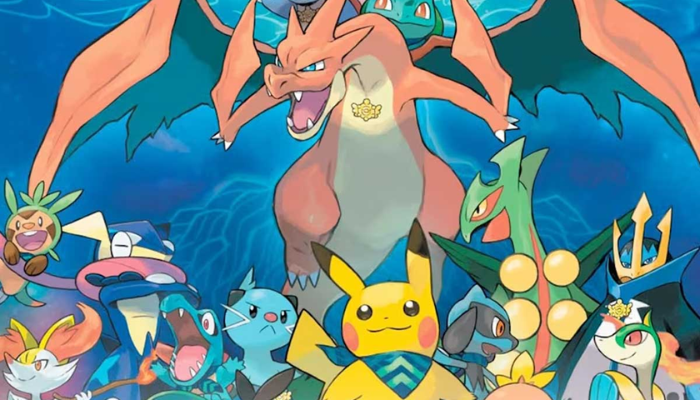
Pokemon too many types is a topic that often sparks debate among fans and competitive players alike. From the early days of the original 151 Pokémon to the modern generations boasting over 900 species, the evolution of Pokémon typing has introduced complexity and strategy like never before. While some Pokémon have a single, straightforward type, others possess dual or even triple traits in certain fan theories and spin-off mechanics. This diversity can make battles thrilling, but also potentially overwhelming for trainers trying to predict weaknesses and resistances.
Understanding why Pokémon have so many types and how these combinations affect gameplay is essential for both casual fans and competitive strategists. In this article, we will explore the reasoning behind type diversity, the challenges it creates, and the strategies for effectively managing Pokémon with multiple types.
The Evolution of Pokémon Types
Since the release of the original Pokémon Red and Blue, the franchise has grown in both scope and complexity. Originally, there were only 15 Pokémon types, including Fire, Water, and Grass. Each type had strengths and weaknesses, forming the backbone of strategic battles. As new generations were introduced, additional types such as Dark, Steel, and Fairy were added, expanding the tactical landscape.
The expansion of types has led to Pokémon too many types for some trainers to easily memorize. Dual-typed Pokémon became more common, combining two separate abilities into one creature, creating both advantages and vulnerabilities. For instance, a Water/Flying Pokémon may have strong offensive potential but also inherits a double weakness to Electric attacks. The proliferation of type combinations has transformed Pokémon battles from simple rock-paper-scissors mechanics to a more nuanced chess-like strategy.
The Advantages of Multiple Types
One major reason Pokémon too many types exist is to create diversity in battle. Dual and sometimes theorized triple-type Pokémon can bring versatility and strategic depth. A single Pokémon with multiple types can cover a broader range of opponents, making it more adaptable in both casual and competitive play.
For example, Pokémon like Charizard, which is Fire/Flying, can counter Grass types effectively while also possessing resistance to certain other attacks. Multiple types also allow for creative movesets, where a single Pokémon can leverage its type combination to maximize damage against opponents or cover its own weaknesses. The existence of multiple types encourages trainers to think critically about team composition, move selection, and battle planning.
Challenges Posed by Type Overload
While having Pokémon too many types can be advantageous, it can also create confusion and imbalance. The more complex a Pokémon’s typing, the harder it becomes to predict interactions in battle. Trainers may struggle to memorize the weaknesses, resistances, and immunities of certain Pokémon, leading to unexpected defeats.
Additionally, some type combinations can result in double weaknesses that make a Pokémon vulnerable despite its strengths. For instance, Grass/Steel Pokémon are extremely rare but have complex resistances and vulnerabilities that can make them difficult to use strategically. As a result, the proliferation of multiple types can overwhelm new players while simultaneously offering competitive depth for seasoned trainers who thrive on mastering type interactions.
Strategies for Managing Pokémon With Multiple Types
Managing Pokémon too many types effectively requires both preparation and tactical thinking. Trainers must account for both offensive and defensive considerations, ensuring their team can handle a variety of opponents. One approach is to build a balanced team with complementary type coverage, minimizing overlap in weaknesses and maximizing potential counters.
Another strategy involves exploiting moves that align with multiple types or cover vulnerabilities. For instance, teaching a Pokémon moves outside its own type, such as giving a Grass/Steel Pokémon Fire-type moves, can offset double weaknesses and surprise opponents. Furthermore, awareness of current meta trends, popular Pokémon, and commonly used type combinations can help trainers anticipate and counter potential threats effectively.
The Future of Pokémon Typing
The concept of Pokémon too many types is likely to continue evolving with new generations. As Game Freak continues to introduce new species, forms, and types, the complexity of Pokémon battles will increase. Some fans speculate about the potential of triple-typed Pokémon in future releases, further amplifying the strategic depth.
Moreover, type dynamics may expand beyond the traditional elemental system. Concepts like regional forms, Mega Evolutions, and Gigantamax transformations have already shown that Pokémon can adapt and change types temporarily, adding layers to gameplay. Understanding and embracing these changes ensures that trainers stay ahead in both casual and competitive settings, keeping battles exciting and unpredictable.
Conclusion
Pokemon too many types is a fascinating aspect of the franchise that highlights both the creativity and strategic complexity of Pokémon battles. While multiple types can create confusion and challenges for trainers, they also provide opportunities for innovative gameplay and tactical decision-making. By understanding type interactions, balancing teams effectively, and anticipating potential vulnerabilities, trainers can make the most of Pokémon with multiple types. As the franchise continues to evolve, mastering Pokémon typing will remain a critical skill for any dedicated Pokémon trainer.
FAQs
- Why do some Pokémon have multiple types?
Multiple types increase strategic depth, allowing Pokémon to cover weaknesses and counter a broader range of opponents. - What is the most common dual-type combination?
Common combinations include Water/Flying, Grass/Poison, and Fire/Flying, each offering balanced offensive and defensive traits. - Can having too many types be a disadvantage?
Yes, complex type combinations can create double weaknesses and make Pokémon harder to use effectively. - Are there Pokémon with more than two types?
Officially, Pokémon have a maximum of two types, though fan theories and spin-off games explore triple-typed possibilities. - How do type interactions affect battle strategy?
Type interactions determine damage effectiveness, resistances, and immunities, shaping both offensive and defensive tactics. - What is a good strategy for handling Pokémon too many types?
Balance your team’s type coverage, use moves strategically, and anticipate opponents’ strengths and weaknesses. - Do multiple types make Pokémon stronger?
Not always. While they provide versatility, vulnerabilities and weaknesses can offset their power. - Which Pokémon has the most complex type combination?
Grass/Steel Pokémon like Ferrothorn are considered complex due to unique resistances and vulnerabilities. - Will future games introduce triple-type Pokémon?
It’s possible. While not officially confirmed, the franchise continues to experiment with forms, evolutions, and type mechanics. - How can beginners manage Pokémon too many types effectively?
Focus on learning common type matchups, start with balanced teams, and practice using dual-type Pokémon in battles.














Leave a Reply